
Why do goalkeepers wear different colors?
Goalkeepers originally took to the field wearing the exact same kit as their outfield teammates. However, as the game grew more competitive, this lack of distinction led to serious controversies, so FIFA intervened.
This intervention by FIFA sparked a regulatory revolution, unassuming position into the subject of one of the most fascinating historical evolutions in sports fashion. Spbolivescore notes that this shift was the catalyst for a century of change, where garments were no longer just clothing, but tools of the trade.
Did you know that for nearly 50 years, keepers famously donned heavy, woolly jumpers to strike fear into the hearts of approaching strikers. Join us as we explore the captivating journey of the goalkeeper's wardrobe and finally answer the essential question: Why do goalkeepers wear different colours?
Why do goalkeepers wear different colours?
In June 1909, the FA mandated that keepers wear a different colour from their teammates, but the choices were incredibly restrictive, limited only to red, white, or blue. It wasn't until 1913 that green was added to the list, eventually becoming the iconic "traditional" color for goalkeepers for much of the 20th century.
During this era, the primary goal was purely functional: visual separation for the referee. In 1912, a major rule change restricted goalkeepers to handling the ball only within their own penalty area rather than the entire half.
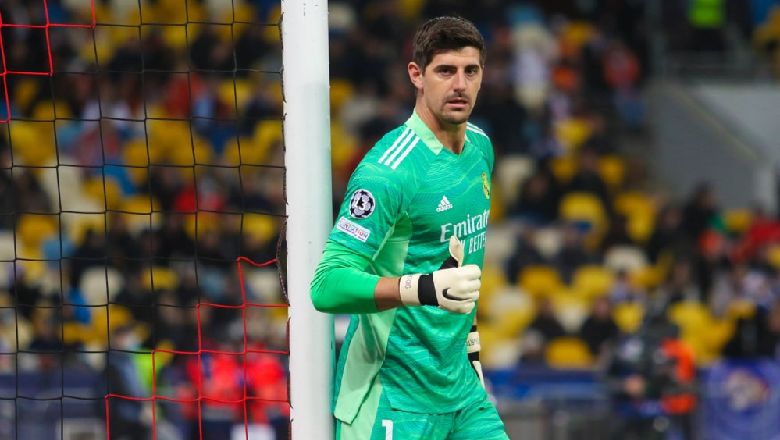
This led to a surprising shift in fashion, because keepers were now more stationary, they began wearing heavy, absorbent woolly sweaters to stay warm. These thick garments served a dual purpose: they protected the player from the cold and made them appear physically larger and more intimidating to approaching attackers.
As the decades progressed, so did the regulations. By the 1939/40 season, shirt numbers became mandatory for outfield players to help spectators identify positions, yet goalkeepers were initially exempt. It was universally understood that the man in the different shirt was "Number 1," and it wasn't until the mid-1970s that printing numbers on the back of keeper kits became a standard practice.
Interestingly, while outfield players waited until the mid-70s for manufacturer logos to appear, brands like Umbro began embroidering their logos on goalkeeper kits as early as 1970. The 1980s introduced aesthetic innovations with the arrival of sublimation printing, allowing for subtle patterns like the diamond designs worn by Soviet legend Rinat Dasayev in the 1986 World Cup.
The true explosion of goalkeeper fashion occurred at Euro '92 and the inaugural 1992/93 Premier League season. Constraints were loosened, leading to a decade of neon yellows, vibrant purples, and erratic geometric shapes.
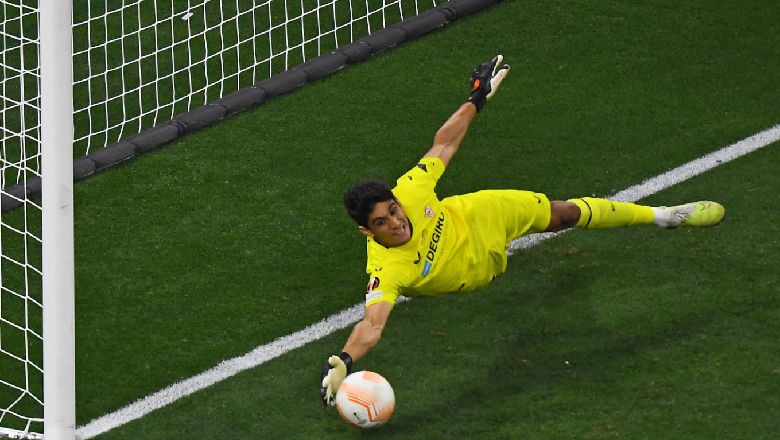
Before the 1994/95 season, goalkeepers often wore the same shorts and socks as the outfield team, creating bizarre color clashes. FIFA eventually mandated full kit coordination to ensure a professional and distinct appearance.
Modern standards, as defined by the International Football Association Board (IFAB), now state that "each goalkeeper must wear colours that are distinguishable from the other players and the match officials." This ensures that even in the high-speed chaos of a modern match, the "specialist" player is instantly identifiable.
Practical benefits of distinctive kits
1. Psychological intimidation and distraction
Scientific research suggests that certain colors can impair an opponent’s performance. A famous study analyzing decades of penalty data found that strikers scored significantly fewer goals against goalkeepers wearing red.
The color red is often associated with danger or dominance in the animal kingdom, triggering a subconscious hesitation in the attacker. Former Manchester United legend Peter Schmeichel famously used quilted, brightly colored jerseys in the 1990s to make his 6'3" frame appear even more "gigantic," a tactic he claimed helped him "spread himself" and psychologically shrink the goal for the striker.
2. Rapid decision making for teammates
In the heat of a defensive scramble, defenders need to know exactly where their "safe outlet" is without looking up for more than a millisecond. A high-visibility jersey allows a defender to find the goalkeeper in their peripheral vision, facilitating faster back-passes and better spatial awareness.
3. Assistance for match officials
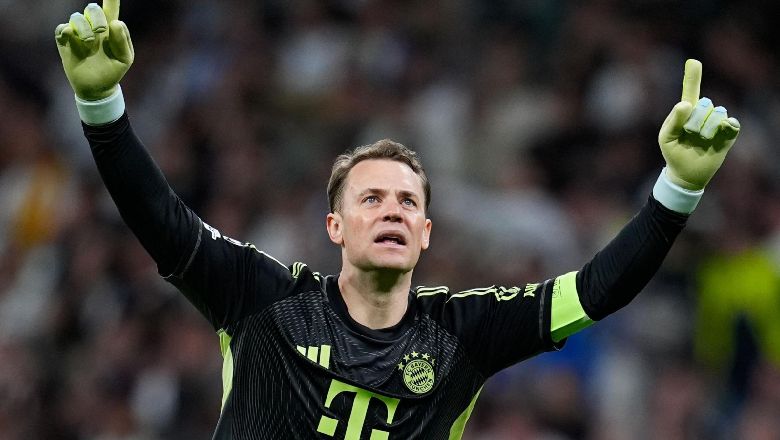
The most fundamental reason remains the prevention of officiating errors. Referee Howard Webb once remarked that the goalkeeper’s distinct kit is essential for judging "handling" offenses and determining who is involved in a collision during corners. Without this distinction, the speed of the modern game would make it nearly impossible to officiate fairly.
4. Enhanced physical protection
Beyond color, the specific design of goalkeeper kits, such as the allowance for "tracksuit bottoms" and padded elbows, serves a physical purpose. Goalies perform dozens of high-impact dives per match. The specialized fabric and padding provide a layer of protection against turf burn and impact injuries that outfield players do not require.
Key goalkeeper kit facts:
1909: The first year different colored kits became mandatory (limited to red, white, and blue).
1912: Use of hands restricted to the penalty area, leading to the use of woolly sweaters for warmth.
1992: The "Color Explosion" began, turning keeper kits into vibrant canvases of graphic design.
Psychological edge: Red kits are statistically proven to lower an opponent's scoring rate during penalties.
Special privileges: Goalkeepers are the only players permitted to wear brimmed caps and long tracksuit trousers.
We hope this detailed explanation from Spbolivescore.net regarding why do goalkeepers wear different colours? has helped you appreciate the deep history and tactical brilliance behind the most unique jersey on the field. Beyond simply satisfying the eyes, these distinctive uniforms give goalkeepers a measurable edge in the psychological battle of elite football.
If you found this deep dive into football history interesting, be sure to save Spbolivescore to your list of favorite sports websites. We offer a completely fresh sports experience, providing constant news on players, managers, and major leagues worldwide. From objective pre-match analysis to unique post-match statistics that you won't find anywhere else, we are your premier destination for the beautiful game.
The Most Popular
-
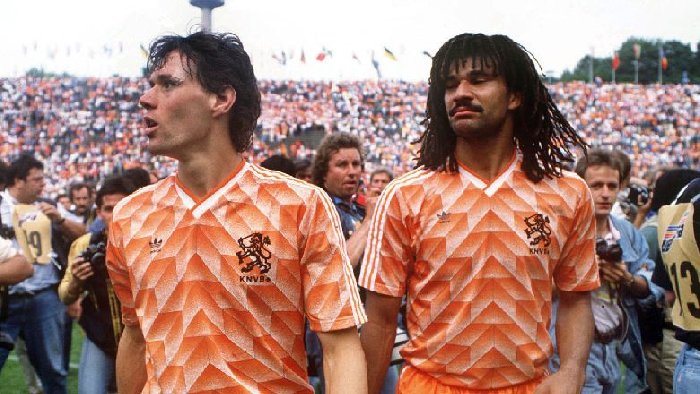 Netherlands football kit history: The 5 most iconic shirts ever made
 -
 Who scored the first goal at Old Trafford?
 -
 Who is better: Haaland or Mbappé?
 -
 Dani Olmo's position at Barcelona explained: Flick’s most flexible player
 -
 All Cristiano Ronaldo's jersey numbers revealed: How CR7 was born
 -
 England national football team squad for the 2026 World Cup: Could Foden and Palmer be left out?
 -
 Why did David Beckham retire?
 -
 How much did Arsenal buy Kai Havertz?
 -
 How much did Bayern Munich pay for Harry Kane?
 -
 How much did Man United pay for Ronaldo?