
What is the Bundesliga? History, point system, teams and interesting facts
To the modern football fan, the Bundesliga can sometimes seem overshadowed by the glitz of the English Premier League or the star power of La Liga. This perception stems largely from the absolute dominance of Bayern Munich, a club that has claimed the title in 12 of the last 13 seasons.
Consequently, the most common question asked before the opening whistle is often not "Who will win?" but rather "How many rounds early will the Allianz Arena residents break the record?" At one point, critics even mockingly labeled the competition the "Bayern Liga," suggesting a monopoly so complete it bordered on the tedious.
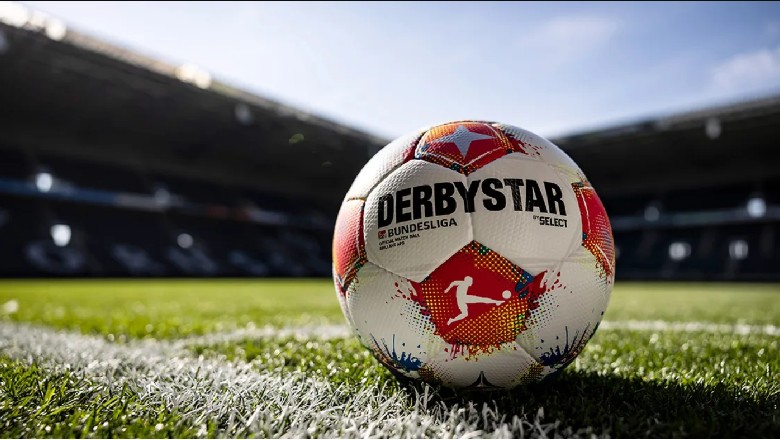
Nonetheless, for Spbolivescore, the Bundesliga has never been just about 1 club. It stands as one of the oldest and most prestigious stages in world football, possessing a unique history, breathtaking statistics, and a distinct identity that creates its own undeniable charm. Do not be quick to dismiss this league as a one-horse race.
Instead, stay with us as we answer the question, "What is the Bundesliga?" and uncover the lesser-known truths that are guaranteed to surprise you.
What is the Bundesliga?
Bundesliga officially was founded on July 28, 1962, when the German Football Association (DFB) voted in Dortmund to establish a unified national top division. Prior to this, German football was fragmented into regional semi-professional leagues known as Oberligas (North, South, West, Southwest, and Berlin).
The primary goal of creating a centralized league was to professionalize the sport and bolster the West German national team’s competitiveness on the international stage. The founders chose the name "Bundesliga," which literally translates to "Federal League." This choice was inspired by the national ice hockey league which had used the term first, reflecting the "Federal" nature of the West German republic and symbolizing a nationwide union of clubs rather than regional clusters.
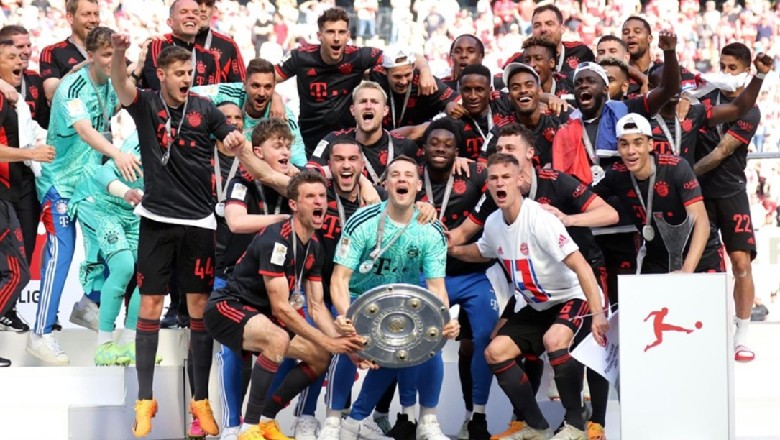
When the inaugural season kicked off in 1963/64, 16 clubs were selected from 46 applicants based on a complex 10-year points system. Under the guidance of manager Georg Knöpfle, 1. FC Cologne (Köln) made history by becoming the first-ever Bundesliga champions, losing only twice in 30 matches.
In those early years, the league was incredibly diverse, featuring 7 different champions in its first seven seasons. As time progressed, the league expanded to 18 teams in 1965, a format that has remained the standard except for the 1991/92 season. Following German reunification, the league briefly expanded to 20 teams to accommodate East German representatives Hansa Rostock and Dynamo Dresden before returning to the 18-club model.
Today, the Bundesliga operates on a standard 3-point-for-a-win system, with 1 point for a draw and 0 for a loss. The top 4 teams qualify directly for the UEFA Champions League, while the bottom two are automatically relegated to the 2. Bundesliga. A unique feature of the German system is the relegation play-off, where the 16th-placed Bundesliga team faces the 3rd-placed team from the second tier in a 2-legged battle for the final top-flight spot.
If teams are tied on points, the hierarchy is determined by goal difference, followed by total goals scored, and then head-to-head results. Throughout its history, 56 different clubs have competed in the Bundesliga, but only 12 have ever lifted the Meisterschale (Championship Shield).
Bayern Munich stands at the summit with a record 34 German titles (33 in the Bundesliga era), followed by Borussia Dortmund and Borussia Mönchengladbach with 5 each. Interestingly, for a long time, Hamburger SV held the record for never being relegated until their historic streak ended in 2018.
To maintain fairness and protect the league's soul, the DFL enforces the famous "50+1 Rule." Introduced in 1998, this regulation mandates that the parent club (the members and fans) must hold at least 50% plus one share of the voting rights. This prevents wealthy external investors from taking full control of a club and turning it into a purely corporate entity.
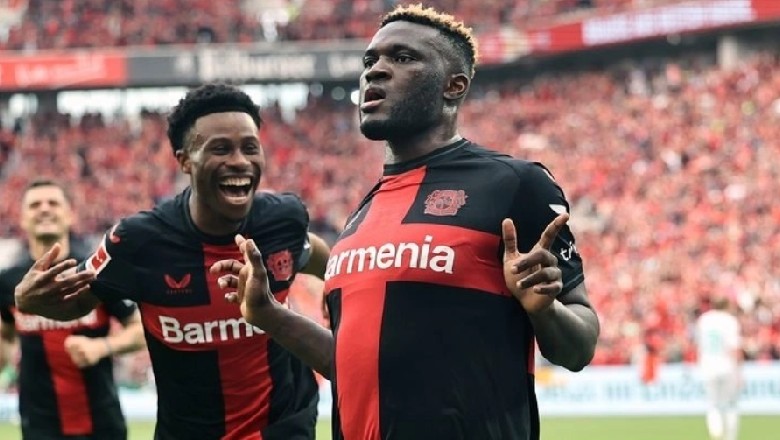
While there are "legacy" exceptions for Bayer Leverkusen and VfL Wolfsburg due to their 20-year history of corporate backing, and a controversial model used by RB Leipzig, the rule remains a cornerstone of German football culture, ensuring low ticket prices and high fan engagement.
The league is also a treasure trove of remarkable individual and collective records. The legendary Gerd Müller, known as "Der Bomber," remains the all-time leading scorer with 365 goals, a feat that defines the clinical nature of German strikers.
In terms of longevity, Charly Körbel holds the appearance record with 602 matches for Eintracht Frankfurt. In the modern era, Thomas Müller has amassed an incredible 12 winner's medals, while Robert Lewandowski holds the record for the most goals by a non-German player (312) and the fastest 5-goal haul in history (9 minutes). From a coaching perspective, Udo Lattek leads with 8 titles, while Jupp Heynckes holds the record for the most combined appearances as a player and coach (1,037).
Summarizing the essential points of the Bundesliga:
It was founded in 1962 and began play in 1963 to unify regional Oberligas.
The 50+1 Rule ensures fans retain majority voting rights in most clubs.
Bayern Munich is the most successful club with 34 national titles.
The promotion/relegation play-off system provides a dramatic end-of-season climax.
Through this comprehensive look, Spbolivescore.net has hopefully clarified the question: "What is the Bundesliga?" We trust that after reading this, you have gained a fresh, multi-dimensional perspective on the rich tradition of Germany’s premier competition. Beyond being a cradle for world-class talent, the Bundesliga serves as a vital artery for the nation, contributing significantly to its economy, tourism, and social fabric.
We invite you to visit our homepage to discover more captivating statistics and stories from the annals of football history. In addition to our deep-dive articles, we provide a high-quality, real-time statistics platform for matches across the globe, paired with objective, expert predictions before and after every game to ensure you never miss a beat in the world of football.
The Most Popular
-
 Why do goalkeepers wear different colors?
 -
 Netherlands football kit history: The 5 most iconic shirts ever made
 -
 Who scored the first goal at Old Trafford?
 -
 Who is better: Haaland or Mbappé?
 -
 Dani Olmo's position at Barcelona explained: Flick’s most flexible player
 -
 All Cristiano Ronaldo's jersey numbers revealed: How CR7 was born
 -
 England national football team squad for the 2026 World Cup: Could Foden and Palmer be left out?
 -
 Why did David Beckham retire?
 -
 How much did Arsenal buy Kai Havertz?
 -
 How much did Bayern Munich pay for Harry Kane?