
What do yellow and red cards mean in football?
In the modern era, disciplinary cards are viewed as the ultimate "protective shields" for referees, allowing them to cool down heated tempers and ensure that matches never cross the line into senseless violence or unsportsmanlike chaos. These vibrant pieces of plastic guarantee fairness for both sides, acting as a visual contract of conduct between the officials and the athletes.
However, it is a fascinating paradox that despite their critical importance, these cards have only existed for just over 50 years, whereas the first professional football match kicked off more than a century ago.
To bridge this knowledge gap, Spbolivescore is here to re-educate fans on the most valuable insights regarding match discipline. From the fundamental question of "What does yellow and red cards mean in football?" to the dramatic history of their creation and the precise evolution of fouls that trigger these penalties, we will explore the mechanisms that keep the game within the bounds of international law.
What do yellow and red cards mean in football?
The formal introduction of the card system traces back to the 1970 FIFA World Cup in Mexico. Before this milestone, referees communicated cautions and ejections verbally, which often led to mass confusion, especially in matches involving teams with different languages. The visionary behind this change was British referee Ken Aston.
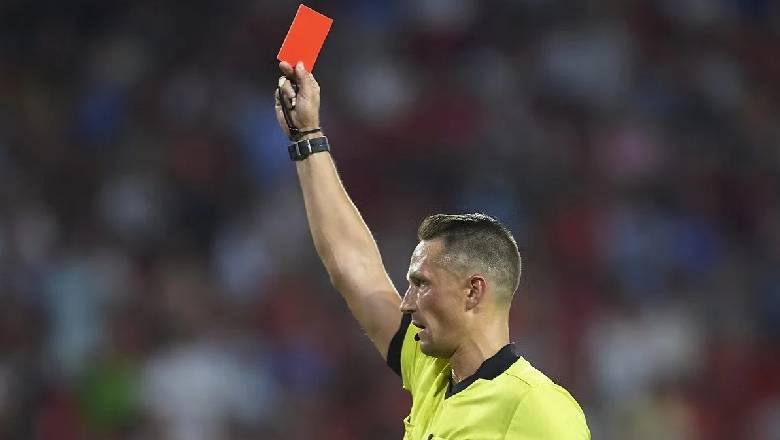
Inspired by the simple logic of a traffic light while waiting at a junction, he realized that yellow (caution) and red (stop) would be universally understood by players, spectators, and media alike. The very first match to see a yellow card used was the opening game of the 1970 tournament between Mexico and the Soviet Union, where Soviet player Kakhi Asatiani made history as the first recipient of a formal caution.
What does a yellow card mean?
A yellow card represents a formal disciplinary warning. The referee brandishes this card to signal that a player has committed a "cautionable offense." In the current regulatory climate, these cards are typically shown for reckless tackles, persistent infringement of the rules, dissent through word or action, or tactical fouls designed to break up a promising counter-attack. Interestingly, the scope of the yellow card has expanded over time. It is now also used to punish "dark arts" such as faking an injury (simulation) or delaying the restart of play.
A "booked" player must immediately adjust their aggression, as any further mistake leads to an automatic dismissal. Statistically, the legendary midfielder Gerardo Torrado and the aggressive Sergio Ramos are among the notable figures who have collected staggering numbers of yellow cards, with Ramos holding the record for the most bookings in La Liga history. Regarding team records, the "Battle of Nuremberg" at the 2006 World Cup between Portugal and the Netherlands remains the gold standard for chaos, featuring a record 16 yellow cards as the referee struggled to maintain order.
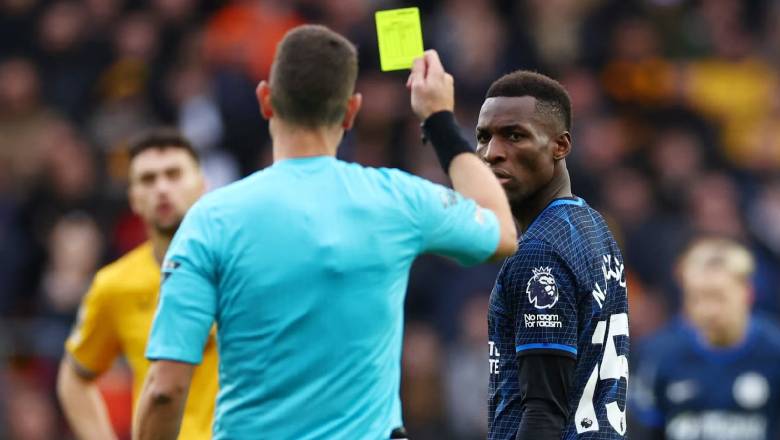
What does a red card mean?
In contrast, a red card is the most severe punishment an official can impose. It is reserved for "serious foul play," which includes violent conduct, spitting at an opponent, or the "DOGSO" rule (denying an obvious goal-scoring opportunity) through a professional foul or an intentional handball. When a red card is shown, the player is ejected instantly and cannot be replaced, forcing their team to play with a numerical disadvantage.
A straight red for violent conduct usually results in a 3-match ban, whereas a dismissal for two yellow cards typically leads to a 1-match suspension. Ramos again dominates this category, having received 26 red cards during his tenure at Real Madrid.
Historically, the most "explosive" match occurred in an Argentinian lower-league game in 2011 between Claypole and Victoriano Arenas, where referee Damian Rubino reportedly showed 36 red cards, dismissing every player, substitute, and coach involved in a massive brawl.
Another cards in football
As football evolves, other governing bodies have experimented with new colors to address specific modern issues. The pink card has recently gained attention in the Copa America, introduced by CONMEBOL. Its primary purpose is to signal a substitution specifically for a suspected concussion or head injury. This card allows teams to prioritize player safety without exhausting their standard substitution quota, ensuring that medical emergencies are handled with transparency.
Furthermore, the white card was introduced in Portugal by the national football federation. Unlike its punitive cousins, the white card is designed to celebrate "Fair Play" and positive ethical values. It was famously used when medical staffs from both Sporting Lisbon and Benfica rushed to help a fan in distress.

Meanwhile, the green card has been utilized in the CONIFA World Football Cup (for non-FIFA affiliated teams). It occupies a middle ground: a player receiving a green card must leave the pitch immediately but can be replaced by a substitute if the team hasn't used all their slots, effectively acting as a "cooling-off" period to prevent escalation without crippling a team's numbers.
This detailed exploration by Spbolivescore.net highlights how the meanings of yellow and red cards are deeply rooted in the need for clarity and safety. Looking ahead, it is highly probable that as the game encounters unprecedented exceptions and technological shifts, FIFA and IFAB (the International Football Association Board) will implement even more specialized cards to assist officials in managing the complexities of 21st-century sport.
While understanding the laws of the game is essential, staying updated on the shifting landscape of global football is what sets true experts apart. Our platform offers a sophisticated blend of upcoming schedules, objective strategic reviews, and vital post-match metrics. We invite you to browse our homepage for an all-encompassing look at the sport’s most pressing stories and analytical breakthroughs.
The Most Popular
-
 Why do goalkeepers wear different colors?
 -
 Netherlands football kit history: The 5 most iconic shirts ever made
 -
 Who scored the first goal at Old Trafford?
 -
 Who is better: Haaland or Mbappé?
 -
 Dani Olmo's position at Barcelona explained: Flick’s most flexible player
 -
 All Cristiano Ronaldo's jersey numbers revealed: How CR7 was born
 -
 England national football team squad for the 2026 World Cup: Could Foden and Palmer be left out?
 -
 Why did David Beckham retire?
 -
 How much did Arsenal buy Kai Havertz?
 -
 How much did Bayern Munich pay for Harry Kane?