
Why is Old Trafford called Theatre of Dreams?
In the modern football landscape, where stadium names are often sold to the highest corporate bidder for commercial gain, Man United’s home stands as a proud, unyielding exception. Within the heart of Manchester, on ground that has soaked up decades of sweat, tears, and even blood through fierce rivalries, there exists a name that feels surprisingly poetic and ethereal.
While other venues prioritize profit, the "Red Devils" march forward with an identity that remains unadulterated. As one of the oldest and most historic arenas in the British Isles, this stadium has witnessed every emotional peak and valley alongside the club. It carries a name rooted in ancient geography, yet its nickname points toward a future of endless ambition.
Despite its global fame, many supporters may still be unaware of the specific origins behind this romantic moniker. Follow the detailed explanation from Spbolivescore below to finally understand: Why is Old Trafford called Theatre of Dreams?
Why is Old Trafford called Theatre of Dreams?
Old Trafford was built in 1910, when it was officially opened as the new home for Man United, moving from their cramped previous grounds at Newton Heath. Designed by the prolific Scottish architect Archibald Leitch, the venue was situated in the Trafford Park area of Greater Manchester.
At its inception, the stadium was a marvel of engineering with a capacity of approximately 80,000 spectators. To put this into perspective, even today, it remains the largest club stadium in the United Kingdom and the second-largest overall, trailing only the national Wembley Stadium. Its prestige is further cemented by being the only club ground in England to have ever received a prestigious 5-star rating from UEFA.
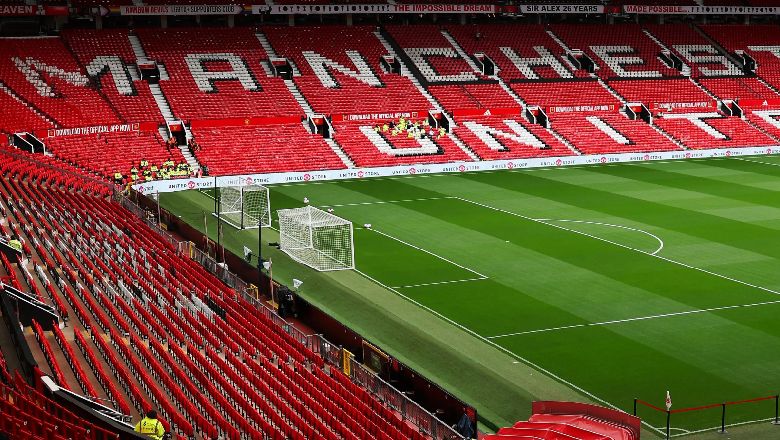
Contrary to what some might assume, the name "Old Trafford" was not a comment on the stadium's age. Instead, it was derived from the local geography. The site was near Old Trafford Hall, an ancient manor belonging to the De Trafford family, whose lineage in the region dates back to the 11th century.
While the name provided a sense of historical grounding, the nickname "The Theatre of Dreams" was a much later addition, famously coined by the legendary Sir Bobby Charlton in the 1980s. Charlton, a man who survived the club's darkest hour in the 1958 Munich Air Disaster and later ascended to European glory, felt the phrase perfectly captured the stadium’s unique ability to transform ordinary players into icons and turn local aspirations into global triumphs.
Architecturally, the stadium is a blend of historic resilience and modern luxury. During World War II, the venue suffered catastrophic damage from German air raids in 1941, which destroyed the main stand and forced the club to share Maine Road with their rivals, Manchester City, for 8 years. The only original structure to survive the bombings is the "Centre Tunnel," the historic passage between the iconic red-brick dugouts where players once entered the pitch. Following the war, the stadium underwent several major redevelopments.
Significant upgrades occurred in the 1990s and mid-2000s, including the addition of second tiers to the North, West, and East Stands. These renovations, costing hundreds of millions of pounds, transformed it into the sprawling "all-seater" colossus we see today. The North Stand, the stadium's largest, was renamed the "Sir Alex Ferguson Stand" in 2011 to honor the manager who delivered 38 trophies, while the South Stand carries Charlton’s name.
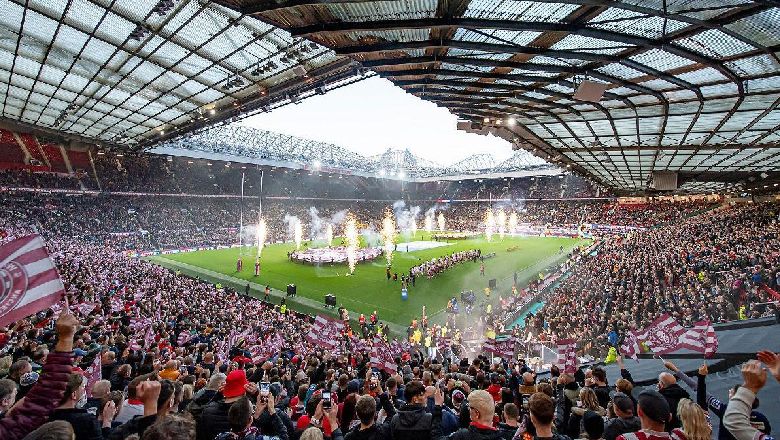
Beyond the matches, physical monuments like the "United Trinity" statue, depicting Best, Law, and Charlton, and the Munich Memorial clock, which is permanently stopped at 3:04 AM, serve as constant reminders of the club's soul.
Looking ahead, the club is exploring the "Trafford Wharfside" project, which could see the construction of a new 100,000-seat stadium, potentially contributing billions to the UK economy.
Summary of Old Trafford’s iconic identity:
Official opening: February 19, 1910.
Original architect: Archibald Leitch (Scotland).
Capacity: ~74,310 (Largest club stadium in the UK).
The nickname origin: Coined by Sir Bobby Charlton to reflect the club’s aspirational spirit.
Major honors: The only UK club stadium with a UEFA 5-star rating.
Key tribute: The Sir Alex Ferguson Stand (North) and Sir Bobby Charlton Stand (South).
Future vision: Potential expansion to 100,000 seats under the new regeneration masterplan.
We hope you have found this comprehensive explanation from Spbolivescore.net regarding Why is Old Trafford called Theatre of Dreams? to be insightful. Beyond a mere nickname, the "dream" envisioned by Charlton has become the guiding principle in the Red Devils' journey of development and excellence.
The articles on Spbolivescore in the future will carry the mission of bringing a fresh perspective to football. We aim to provide deep-dive content and knowledge that fans might have glanced at momentarily but often missed the most fascinating underlying values. Furthermore, the website will continuously update the hottest news about players, clubs, and top-tier leagues worldwide. With a team of objective, highly professional analysts, we promise to bring you the most interesting and expert viewpoints on the beautiful game.
The Most Popular
-
 Why do goalkeepers wear different colors?
 -
 Netherlands football kit history: The 5 most iconic shirts ever made
 -
 Who scored the first goal at Old Trafford?
 -
 Who is better: Haaland or Mbappé?
 -
 Dani Olmo's position at Barcelona explained: Flick’s most flexible player
 -
 All Cristiano Ronaldo's jersey numbers revealed: How CR7 was born
 -
 England national football team squad for the 2026 World Cup: Could Foden and Palmer be left out?
 -
 Why did David Beckham retire?
 -
 How much did Arsenal buy Kai Havertz?
 -
 How much did Bayern Munich pay for Harry Kane?