
What happens if aggregate is tied in the Champions League?
Since the tournament was rebranded in 1992, the UEFA Champions League has utilized a home-and-away format for its knockout stages to determine which club progresses to the next round. In theory, the winner is simply the team that outscores its opponent over the course of two 90-minute matches.
However, football is rarely that straightforward, and often, after 180 minutes of intense action across two different stadiums, the scoreboard remains stubbornly equal. When the dust settles and no clear winner has emerged, how exactly does the competition resolve this stalemate? Does the tournament look back at past performances, or is there a specific protocol to find a victor on the night?
To clarify these crucial regulations, let us look at the detailed explanation from Spbolivescore regarding the question: What happens if aggregate is tied in the Champions League?
What happens if aggregate is tied in the Champions League?
The current Champions League season features an expanded 36-team league phase where teams accumulate points, 3 for a win and 1 for a draw, to determine their ranking. From September to late January, this massive screening process identifies the top clubs. However, once we enter the knockout phase, the system transitions into an aggregate goal format.
If teams finish level on goals after the second leg, the solution is immediate: two 15-minute periods of extra time are played. If the score is still tied after these 30 minutes, a penalty shootout takes place to decide the winner.
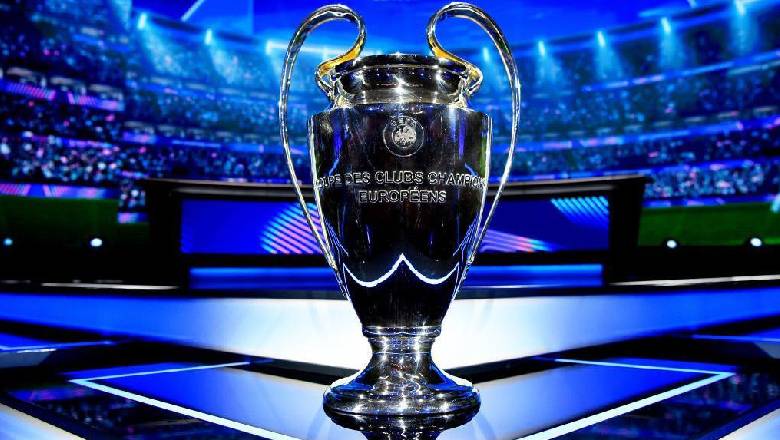
For example, in the upcoming semi-finals, if PSG and Bayern Munich or Atletico Madrid and Arsenal find themselves tied at the end of their respective second legs, they will not play a third replay match. Instead, they will fight through extra time at the Allianz Arena or the Emirates Stadium to find a breakthrough.
This modern approach is significantly different from the "away goals rule" version that dominated the tournament from 1965 until 2021. Under the old system, if the aggregate score was tied at 2-2, but Team A had scored twice at Team B's stadium while Team B only scored once at Team A's, Team A would advance. This was often described as away goals "counting double," though they actually served only as a tiebreaker.
For decades, this led to iconic moments, such as when Barcelona famously overcame deficits because of their efficiency on the road. However, UEFA abolished this rule in 2021 because it often forced home teams to play too defensively, fearing that conceding a single goal would be too punishing. The current version ensures that every goal is equal, promoting a more attacking style of play where teams are not afraid to take risks at home.
Historically, the competition has seen various ways to settle ties. In the very early days of the European Cup in the 1950s, if an aggregate score was level, a third play-off match on neutral ground was often required. Later, the away goals rule was introduced to eliminate the logistical nightmare of scheduling these extra games. In certain eras, even the number of corner kicks or a coin toss was considered, but UEFA eventually settled on extra time and penalties as the most sporting way to conclude a match.
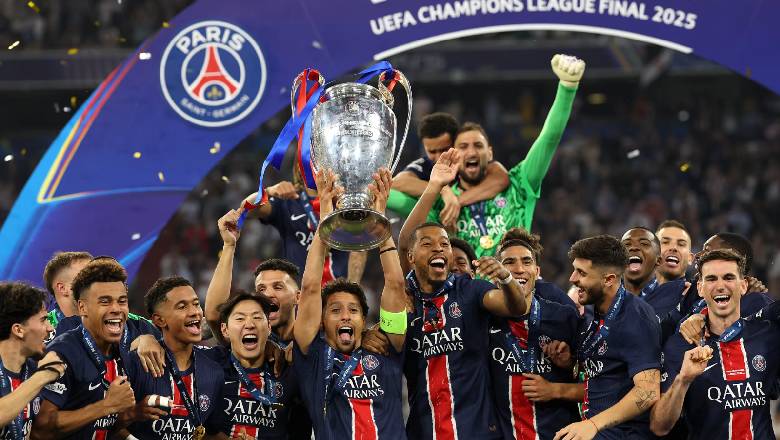
The recent shift to host the second leg based on league phase ranking, where the top 4 teams are guaranteed the second leg at home, is another strategic change designed to reward consistent performance throughout the long season.
As we stand in April 2026, the competition has reached the thrilling Semi-final stage. The first pair features PSG vs Bayern Munich, with the first leg at the Parc des Princes on April 28 and the return leg at the Allianz Arena on May 6. The second pair sees Atletico Madrid vs Arsenal, starting at the Wanda Metropolitano on April 29 and concluding at the Emirates Stadium on May 5.
These 4 giants are fighting for a place in the grand final, which is scheduled for May 30, 2026, at the iconic Puskas Arena in Budapest, Hungary. If any of these matches remain undecided after the regulation 180 minutes, the world will witness the tension of extra time and the ultimate drama of a penalty shootout.
Key points of the Champions League aggregate system:
Abolition of away goals: All goals carry equal weight regardless of where they are scored.
Extra time protocol: Two 15-minute halves are mandatory if the aggregate is tied after 180 minutes.
Penalty shootout: The final tiebreaker if extra time fails to produce a winner.
Home advantage reward: Top-ranked teams from the league phase host the decisive second leg.
No replays: Unlike domestic cups in some countries, there are no replay matches in the modern UCL knockout stage.
This method of deciding a winner is not unlike other major cup competitions globally, where extra time and the lottery of penalties are seen as the most efficient ways to settle a deadlock after two legs of play. Spbolivescore.net hopes this article has helped clear up any long-standing confusion regarding What happens if aggregate is tied in the Champions League?
Are you satisfied with the answers provided by Spbolivescore? If you found this information interesting, please continue to support us and transform your sports experience in the most creative and modern way possible. Beyond these articles, you can discover unique statistics that not everyone knows.
Furthermore, we constantly update the schedules of the world's leading national leagues, providing live developments, match results, and in-depth analysis both before and after every game to ensure your passion for football is fully realized.
The Most Popular
-
 Why do goalkeepers wear different colors?
 -
 Netherlands football kit history: The 5 most iconic shirts ever made
 -
 Who scored the first goal at Old Trafford?
 -
 Who is better: Haaland or Mbappé?
 -
 Dani Olmo's position at Barcelona explained: Flick’s most flexible player
 -
 All Cristiano Ronaldo's jersey numbers revealed: How CR7 was born
 -
 England national football team squad for the 2026 World Cup: Could Foden and Palmer be left out?
 -
 Why did David Beckham retire?
 -
 How much did Arsenal buy Kai Havertz?
 -
 How much did Bayern Munich pay for Harry Kane?